Finding a reliable gas leak detector is essential for every home, RV, or small workshop. The right tool helps you identify methane, propane, and other combustible gases quickly and safely, reducing risk and giving you clear, actionable guidance. This article highlights five top devices and provides a practical buying guide to help you select the best option for your needs.
Summary table of selected products:
| Product | Brand | Key Capability | Notable Feature |
|---|---|---|---|
| PT199 Natural Gas Leak Detector | TOPTES | Detects natural gas, methane, propane, butane | 0.5-second alarm, red LCD on high gas levels |
| PT520A Natural Gas Detector | TOPTES | Leaks in tight spaces, 17-inch gooseneck | 75dB alarm, 50-10,000 ppm range |
| Klein Tools ET120 Gas Leak Detector | KLEIN TOOLS | Wide range, adjustable sensitivity | Five red LEDs, 85dB alert |
| PT760 Rechargeable Natural Gas Detector | TOPTES | Multi-gas detection with 12-inch probe | %LEL readout, Type-C charging |
| PT299 Gas Leak Detector | TOPTES | Extendable rod for hard-to-reach areas | 0.5-second response, 9-bar visualization |
TopTes PT199 Natural Gas Leak Detector
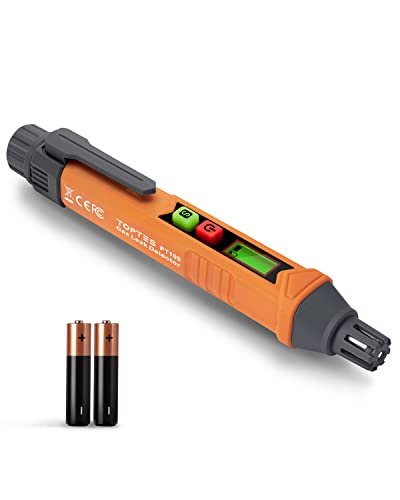
The PT199 is designed for quick detection of combustible gases such as natural gas, methane, propane, and LPG. It offers immediate feedback with both audible and visual alarms. The device starts up in about 30 seconds and includes two AAA batteries. Its LCD screen turns red as gas concentration rises, providing a clear, at-a-glance indication of danger. A low-battery indicator helps ensure you’re never caught without power, and automatic shutoff after five minutes of inactivity conserves battery life. This compact, easy-to-use detector suits routine home inspections and emergency readiness.
Key features include a rapid 0.5-second alarm, a broad gas detection range, and a straightforward user experience. For homeowners wanting a portable, ready-to-use detector with clear alarms, PT199 offers a balanced combination of speed, reliability, and simplicity.
TopTes PT520A Gas Leak Detector

The PT520A focuses on locating leaks in tight spaces with a 17-inch gooseneck, ideal for reaching behind appliances, pipes, storage areas, and basements. It detects a broad range of hydrocarbon gases and provides a quick, responsive alert system. With seven colored indicator bars and a robust 75dB alarm, the device communicates gas concentration levels effectively. The 50-10,000 ppm detection range covers common residential leaks, making it suitable for both indoor and outdoor inspections. The extended probe adds versatility for assessment in confined or difficult-to-access areas.
Its combination of distance reach, fast response, and clear visualization makes PT520A a strong choice for users who need to pinpoint leaks without moving large objects or dismantling fixtures. The device’s intuitive feedback helps users determine where to take action next, whether tightening connections or venting a space.
Klein Tools ET120 Gas Leak Detector

The Klein ET120 offers a wide detection range from about 50 to 10,000 ppm, providing flexibility across a variety of gas leak scenarios. It features adjustable sensitivity with High and Low settings to tailor detection for precise environments. The device emphasizes strong signaling through five red LEDs and an 85dB audible alert that intensifies with gas concentration. The ET120 is well-suited for professionals and DIY users who require adjustable sensitivity to match scene conditions, whether testing tight spaces or open areas. With its clear visual cues and audible alarms, it supports quick, confident responses to potential leaks.
For homeowners who need a capable, adaptable detector in everyday settings, the ET120’s combination of broad range and user-adjustable sensitivity helps balance false alarms with real danger signals. The compact form factor also makes it convenient for travel or on-site checks around the house, workshop, or RV.
TopTes PT760 Rechargeable Gas Detector

The PT760 is a rechargeable multi-gas detector with a 12-inch extendable probe, designed for tough-to-reach areas. It detects multiple fuels, including LPG, methane, ethane, propane, butane, natural gas, and coal gas, and it provides both audible and visual alerts. A key feature is the screen display, which shows the current %LEL reading, giving users a direct gauge of leak severity. The device’s telescoping probe enhances versatility for inspections behind walls, inside cabinets, and inside compartments in vehicles or buildings. It also ships with a protective box, aiding transport and storage, making it a practical option for ongoing inspection routines.
For users who work with gas systems in confined spaces or require frequent portable checks, the PT760’s multi-gas capability, extendable probe, and clear readouts offer a comprehensive solution for maintaining safety and compliance in home and professional settings.
TopTes PT299 Gas Leak Detector

The PT299 is designed for reach and precision, featuring an extendable rod to test hard-to-reach locations such as pipelines, storage areas, and RV compartments. Its 0.5-second response time, visual bar display, and a 75dB buzzer provide rapid, actionable feedback on gas presence and concentration. The retractable pole design supports testing without direct proximity to potential leaks, reducing exposure while maintaining accuracy. This makes PT299 a practical option for users who need to examine narrow spaces or recessed areas without maneuvering heavy equipment.
The PT299 balances portability with performance, making it suitable for a wide range of settings—from households performing routine checks to RV enthusiasts and workshop professionals who require flexible testing capabilities.
Buying Guide: Key Considerations For Choosing A Gas Leak Detector
Gas coverage and detection range
Choose detectors that cover common residential gases: methane, propane, butane, LPG, and natural gas. A wider ppm and LEL range helps ensure you detect leaks early and avoid false negatives in varying atmospheres.
Response speed and alarms
Speed matters: look for devices with rapid 0.5-second responses and clear audible alarms (ideally above 75dB) complemented by visual indicators. A rising alarm intensity and color change can help you judge danger levels at a glance.
Probe length and reach
longer probes—such as 12-17 inches—enable testing in tight spaces, behind appliances, or inside cabinets without invasive disassembly. Telescoping or gooseneck designs add versatility for professional-grade inspections and DIY tasks alike.
Power and portability
Battery-powered detectors are portable and quick to deploy. Some models include rechargeable batteries and USB-C or standard batteries. Consider auto-shutoff features to preserve power when not in use.
Ease of use and readouts
Top considerations include a simple interface, intuitive LEDs or LCD readouts, and clear alarms that show gas concentration. A device with a visual percentage readout (Percent LEL) helps quantify risk and prioritize actions.
Durability and form factor
Compact, pocket-sized units are convenient for day-to-day checks, while larger units with extendable probes suit professional use. Look for robust constructions, protective cases, and accessories like pouches for storage and transport.
Maintenance and lifetime
Check warranty length, battery life, and availability of replacement parts or sensors. Regular calibration and battery checks keep detectors reliable over time, especially in environments with fluctuating temperatures or humidity.
Usage context and safety considerations
Consider your setting: home use, RVs, garages, or industrial environments all have different requirements. If you regularly inspect confined spaces, prioritize detectors with longer probing capability and strong alarms to ensure timely action.