Mass loaded vinyl (MLV) underlayments are a dense, flexible solution designed to block airborne noise and reduce vibration transmission across walls, floors, and ceilings. This guide highlights five top options, detailing their densities, thicknesses, and installation considerations to help you choose the right product for home theaters, studios, or multi‑family living spaces. Each product profile includes practical specs and practical application tips for optimal sound control.
| Product | Density | Typical Use | Key Benefit |
|---|---|---|---|
| Trademark Soundproofing Mass Loaded Vinyl | 1 lb/ft² | Walls, ceilings, floors | High STC rating with non-toxic material |
| TroyStudio Mass Loaded Vinyl Barrier | 1 lb/ft² | Walls, ceilings, outdoor/indoor | Excellent vibration damping and flexibility |
| Mass Loaded Vinyl MLV Barrier 2 lb | 2 lb/ft² | Perimeter barriers, heavy noise reduction | Improved performance at low frequencies |
| QuietWalk Underlayment | 3 mm thickness equivalent underlayment | Laminate & hardwood floors | Moisture barrier and compatibility with pre-attached pads |
| EnviroFlex 1 lb MLV | 1 lb/ft² | Walls, ceilings, vehicles, studios | Professional-grade STC improvement and easy handling |
Trademark Soundproofing Mass Loaded Vinyl (1 lb)
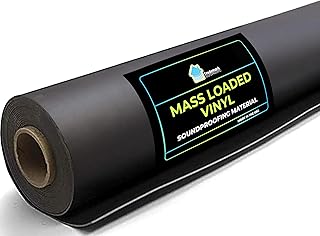
Trusted for wall sound barriers, this 1/8 inch thick MLV delivers a dense barrier with a proven STC rating around 27. The material weighs about 1 pound per square foot, making it a practical choice for standard residential applications. It’s designed for walls, floors, and ceilings, and uses virgin, non-toxic material without regrind or recycled content. The product is produced in the USA, aligning with buyers seeking domestic manufacturing and safety standards. It’s suitable for adding mass to existing constructions without excessive bulk.
In practice, installers appreciate its balance of density and flexibility, which supports easy cutting and fitting around outlets and irregular shapes. For best results, apply to studs or joists, seal seams with compatible tape, and cover with standard drywall or paneling. While a single layer provides solid results, combining with other decoupling methods can further improve performance in demanding environments such as home theaters or busy living spaces.
TroyStudio Mass Loaded Vinyl Barrier (1 lb/sqft)

Offering a dense 1/8 inch profile and about 1 lb per square foot, this MLV barrier emphasizes vibration dampening alongside sound blocking. Its backing includes nonwoven fabric, and the material is described as waterproof and flame retardant (B1). The high damping coefficient rubber and dense polymer metal powder contribute to a notable STC rating around 28, supporting effective mass addition to walls and ceilings. The thin, flexible form facilitates installation by a single person, even in tight spaces, while remaining suitable for both indoor and outdoor use.
Beyond room acoustics, this product supports vibration control in environments with mechanical equipment or heavy foot traffic. It’s suitable for projects ranging from studios to media rooms where space is at a premium, as the material adds mass without excessive thickness. For best practice, ensure clean joints, avoid gaps, and secure seams with compatible tapes or fasteners designed for MLV products.
Mass Loaded Vinyl Barrier 4′ x 15′ 2 lb

This heavier 2 lb/ft² MLV version emphasizes enhanced low-frequency attenuation, making it a preferred option when additional mass is required for home theaters or exterior noise challenges. With a thickness around 1/4 inch (5 mm) and a roll size of 4 feet by 15 feet, it provides about 60 square feet of coverage per roll. Installation is straightforward: cut with a utility knife, seam with sheathing tape, and fasten using staples, nails, or screws. The higher density translates to improved performance against rumble and traffic noise, especially when used in conjunction with decoupling and isolation methods.
As with other heavy MLV products, careful handling and precise placement maximize effectiveness. Consider laminating with resilient channels, acoustic sealant at edges, and taxonomic layering behind wall panels to address complex sound paths. This product is well-suited for larger rooms or areas with consistent noise intrusion from outside sources.
QuietWalk Underlayment (360 sq ft)

QuietWalk Underlayment is designed for laminate and hardwood floors, offering a 3 mm thickness and compatibility with floors that include a pre-attached pad. It provides an integrated moisture barrier to protect the subfloor from vapor intrusion, which is particularly beneficial in basements or areas with high humidity. While primarily a floor underlayment, its mass contributes to reducing impact sounds and improving floor comfort across rooms. It’s a practical choice when upgrading flooring in multi‑story living spaces where footfall and appliance noise can be noticeable.
Installation is typically straightforward: roll out, trim to fit, and secure per manufacturer guidance. The product’s moisture barrier helps reduce squeaks and maintain subfloor integrity, particularly in environments with concrete or plywood bases. While it isn’t a stand-alone wall barrier, pairing QuietWalk with an upper-layer MLV can create a multi-layered sound-control strategy for both floors and adjacent rooms.
EnviroFlex Mass Loaded Vinyl 1 lb (4’x4’)

EnviroFlex MLV is a professional-grade option delivering 1 lb per square foot density for robust acoustic control. Marketed for walls, ceilings, and vehicles, it emphasizes STC improvements when applied behind drywall or under flooring. The product is described as flexible and easy to cut, with installation possible using screws with washers, adhesive, or cap nails. The material’s durability and malleability support installations that follow irregular surfaces or curved geometries, making it suitable for a variety of environments, including studios, apartments, or vans used for mobile recording or living spaces requiring quieting measures.
When planning a purchase, consider the overall sound control goals: whether you need primary mass for a wall, or supplementary treatment in combination with decoupling systems. EnviroFlex’s performance depends on correct sequencing with other acoustic strategies like sealing, resilient channels, and appropriate drywall assemblies. It also benefits from careful seam sealing and edge treatment to minimize sound leakage.
Buying Guide: Key Purchase Considerations For Mass Loaded Vinyl Underlayment
Density And Thickness
Higher densities (1–2 lb/ft²) generally improve low‑frequency attenuation but come with added weight and stiffness. Lighter 1 lb/ft² options are easier to handle for standard walls and ceilings, especially in retrofit projects. Thickness matters for space-constrained installations, as bulkier materials may require careful planning for door clearances and wiring routes.
Application Type And Location
Choose MLV products based on whether you’re soundproofing walls, ceilings, or floors. Some products are explicitly designed for floors with moisture barriers, while others are optimized for walls and ceilings. For multi-room layouts, layering MLV with decoupling methods (like resilient channels) and sealants yields better overall results.
Moisture Resistance And Fire Ratings
Water resistance and fire retardancy are important for spaces like basements, garages, or areas near moisture sources. Note flame retardant classifications (e.g., B1) and material safety data when selecting products for specific building codes or occupant safety considerations.
Ease Of Installation
Access to tools and labor availability influences selection. Lighter MLV tends to be easier to handle, while heavier variants may require multiple installers or mechanical assistance for accurate placement and securing. Backing materials, such as nonwoven fabrics, can affect cutting, seam sealing, and bonding choices.
Long-Term Performance And Compatibility
Most MLV products are designed for long-term performance, but compatibility with existing subsurfaces, drywall, floor coverings, and sealants is essential. Consider whether you’ll pair MLV with additional acoustic treatments to target specific frequencies or to address structural vibration in addition to airborne noise.
In summary, the best choice depends on the noise profile, installation space, and preferred balance between manageability and performance. For standard residential use, a 1 lb/ft² product like the Trademark Soundproofing or EnviroFlex options offers solid effectiveness with manageable weight. For greater low-frequency performance, a 2 lb/ft² option provides extra mass. For floors, look to underlayment with moisture barriers like QuietWalk to address both impact noise and subfloor vapor.