Choosing the right IR laser safety glasses is essential for protecting vision while working with diverse laser wavelengths. The products below offer broad spectral coverage, lightweight comfort, and CE or FDA-related certifications where available. This guide highlights five standout options and compares their key features to help you select eyewear that matches your laser equipment and daily tasks.
| Product | Brand | Primary Wavelength Range | Optical Density | Notable Feature |
|---|---|---|---|---|
| xTool Laser Safety Glasses | xTool | 316nm-450nm & 900nm-1080nm | OD varies by model (high OD for certain variants) | Ultra-lightweight, compatible with multiple xTool models |
| Laserlands Optical Safety Goggles | Laserlands | 190-450nm & 800-1700nm | Not specified in listing | CE certified, broad spectrum coverage |
| MCWlaser Laser Safety Glasses | MCWlaser | 190-540nm & 800-1700nm | OD 5+ | Comprehensive protection with wide coverage |
| BLUETIMESOD6+ Glasses | BLUETIMES | 200-450nm & 800-2000nm | OD6+ | Lightweight, comfortable, broad range |
| TRQWH Safety Glasses | TRQWH | 808nm, 980nm, 1064nm (typical) | OD7+ | CE/FDA certified, ergonomic design |
All five options provide essential protection across common laser bands used in engraving, cutting, and marking. When evaluating glasses, consider the wavelengths you use most often, the necessary optical density, weight for extended wear, and whether frames accommodate prescription lenses or additional eye protection needs.
xTool Laser Safety Glasses — F1, S1, M1 Series

The xTool safety glasses are designed to protect eyes against a broad range of lasers while remaining light in weight. The design emphasizes comfort for all-day wearing with a frame that weighs around 50g, making it suitable for extended engraving sessions. The glasses advertise compatibility with a wide set of xTool devices, including F1, F1 Ultra, S1, M1 Ultra, M1, and D1 Pro and D1 models. This broad compatibility can simplify gear choices for users already invested in the xTool ecosystem.
Optical performance focuses on protecting against wavelengths from 316nm through visible light bands to 450nm, and near-IR bands from 900nm to 1080nm. If your workflow includes multiple laser types, these glasses provide a consolidated option without frequent swaps. The eyewear is described as comfortable with a lightweight feel, reducing fatigue during long sessions. When selecting, confirm the exact model’s OD rating and ensure the glasses align with your specific laser setup.
Laserlands 190-450nm & 800-1700nm Goggles

Laserlands offers a broad spectral range that includes both UV and IR bands, suitable for fiber lasers and Nd:YAG devices. The listed wavelengths span from deep ultraviolet through visible to near-infrared, including typical lines at 808nm, 810nm, 904nm, 980nm, 1064nm, and beyond. The device is marketed with CE certification and indicates compatibility with He-Cd and Nd:YAG lines, suggesting robust protection for common industrial laser operations. For users juggling multiple laser types, this model presents a versatile option with a single eyewear solution.
Consider the protection approvals and comfort features. Widespread wavelength coverage reduces the need to switch eyewear as you switch tools. It’s helpful to verify the OD values at your critical wavelengths to ensure your exposure remains within safe limits during intensive cutting or marking workflows. Ergonomics and lens clarity can affect task accuracy, especially in precision engraving tasks.
MCWlaser OD5+ Glasses for Broad Spectrum Protection
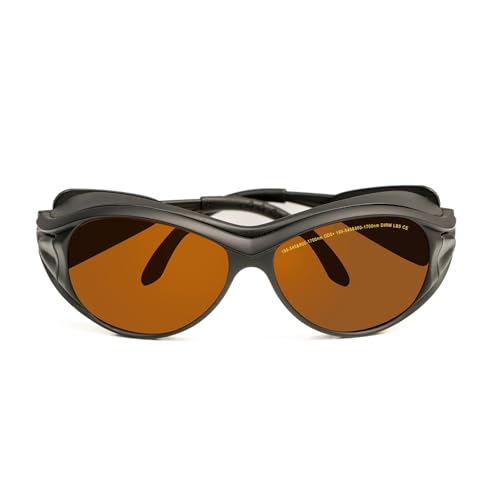
MCWlaser presents an OD5+ solution designed for a wide spectrum range from 190-540nm through 800-1700nm. The high OD rating implies strong attenuation of specified wavelengths, offering reliable eye protection for common laser tasks that can include ultraviolet and near-infrared bands. The listing highlights a hardened PC lens material and a comfortable frame with a substantial field of view, which can help when aligning beams or monitoring workpieces.
These glasses are described as meeting CE standards, which adds a level of reassurance about safety testing. If your work involves frequent exposure to powerful UV and IR lines—such as certain marking or engraving processes—this option provides a balance of protection and comfort. As always, check the exact OD at your primary wavelengths to ensure optimal protection for your setup.
BLUETIMES OD6+ Wide-Spectrum Glasses

BLUETIMES OD6+ glasses offer high-density protection across critical wavelengths, including 200-450nm (UV) and 800-2000nm (IR). The OD6+ rating indicates strong attenuation, which is helpful in demanding environments like high-power welding or engraving. The eyewear emphasizes a lightweight frame (about 0.8 oz) with adjustable nose pads and anti-slip temple tips for comfortable extended wear. This design supports precise tasks while reducing the risk of goggles shifting or fogging during operation.
In practice, broad-spectrum coverage helps protect against accidental exposure to stray or reflected beams. For users working with both UV and IR lines or engaging in both industrial and cosmetic laser applications, these glasses can be a reliable, all-in-one solution. Confirm the exact OD at your primary wavelengths to ensure coverage aligns with your laser configuration.
TRQWH OD7+ Safety Glasses for 800-1100nm

TRQWH safety goggles are designed with an OD7+ rating for serious laser work within the 800-1100nm range, commonly used by fiber lasers, welding, and marking equipment. The listing highlights an ergonomic design with a protective PC frame and specialized lenses engineered to absorb specific wavelengths, while maintaining a light and comfortable fit for long sessions. The included FDA and CE certifications add credibility for workplaces with strict compliance requirements.
These glasses balance protection, comfort, and style, aiming to minimize fatigue during extended tasks. If your daily routine revolves around near-IR laser operations, this model offers strong attenuation along with a design that supports prolonged use. Always verify compatibility with your laser’s exact wavelengths to ensure optimal protection.
Buying Guide: Key Purchase Considerations
- Wavelength coverage: Compare the primary wavelengths you use (UV, visible, IR) and choose glasses that cover those bands with adequate optical density.
- Optical density (OD): Higher OD provides stronger attenuation. Match the OD to the laser power and exposure risk of your typical workflow to avoid over- or under-protection.
- Weight and comfort: Lighter frames reduce fatigue during long sessions. Look for adjustable nose pads, non-slip temples, and curved frames that stay in place during movement.
- Certifications and standards: CE, FDA, and EN207 compliance indicate adherence to safety and performance benchmarks. Verify that the glasses meet the standards applicable to your work environment.
- Field of view and lens quality: Large lenses with clear visibility help with alignment and monitoring of workpieces. Lens material should be impact resistant and scratch-proof for durability.
- Compatibility: If you own a specific brand of laser or engraving system, verify that the glasses accommodate the wavelengths typical for that equipment or opt for a broad-spectrum model.
- Impact resistance: For industrial settings, eye protection should withstand accidental impacts and resist chemical exposure or cleaning agents used in workshops.
- Cost of replacement: Consider the availability of replacement lenses or frames and the overall cost of ownership if you frequently work in demanding environments.
- Use case clarity: Distinguish between professional-grade safety eyewear for industrial use and consumer models designed for hobbyist projects to ensure you meet job-site safety requirements.
When evaluating options, assemble a short list of the wavelengths you encounter most often, then compare those wavelengths against the provided OD values. Additionally, consider whether you need a single pair that spans both UV and IR or a specialized pair tailored to a narrow wavelength band. The right eyewear should protect eyes without compromising vision or comfort during precise laser engraving tasks.